

Shuffle Privacy Policy for Safer Crypto Casino Accounts and Data Control

What personal data Shuffle collects from players
During registration and account activity, Shuffle Casino may collect several categories of information required to support casino access, sportsbook participation, payments, verification, and communication. The amount of information collected can depend on account activity, verification requirements, and the services being used.
The use of the platform generally means acceptance of privacy-related practices described by Shuffle, including account monitoring, payment verification, communication handling, and fraud prevention.
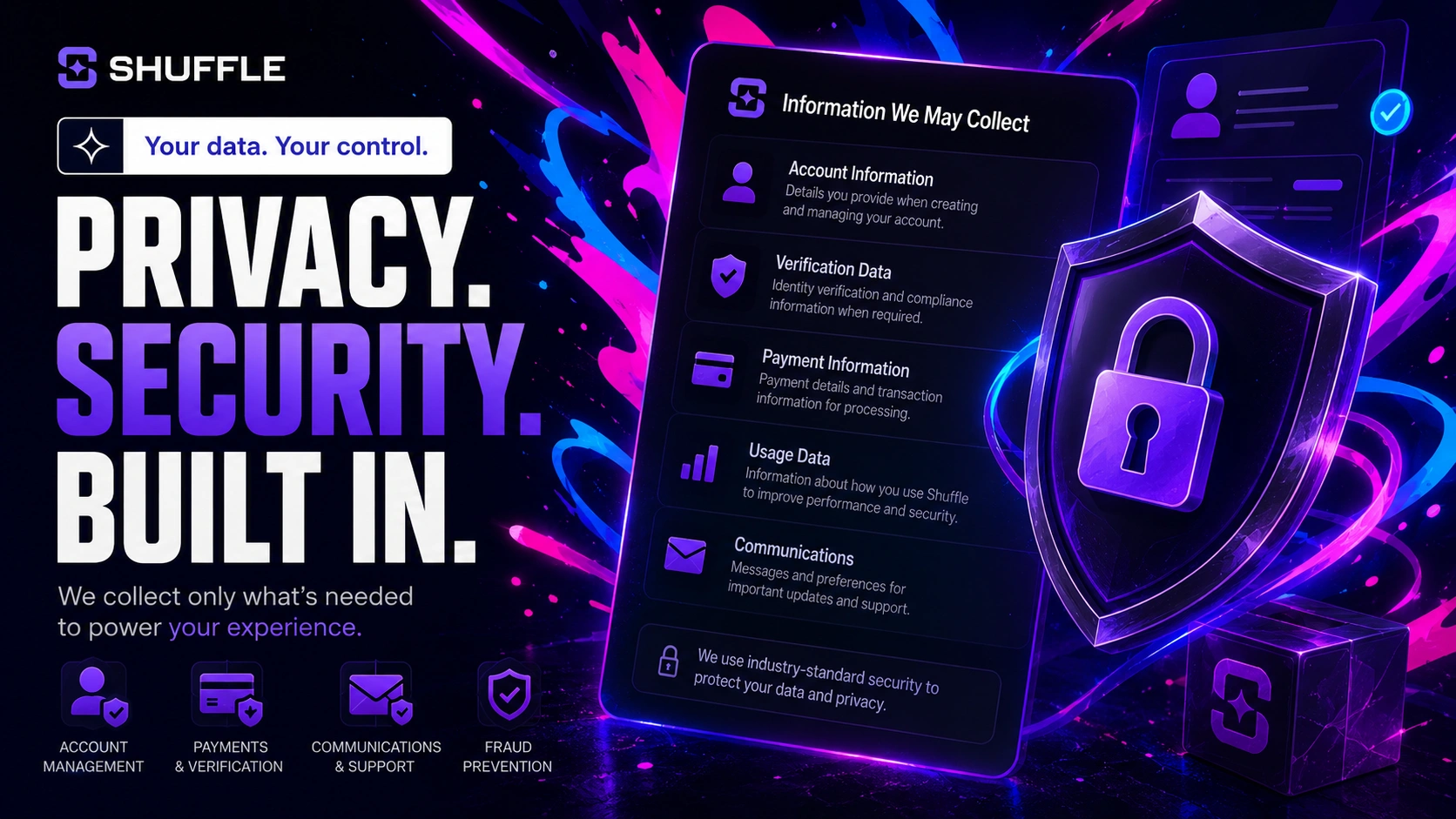
Categories of personal information may include:
- Full name, home address, email address, and telephone number;
- Date of birth and account verification details;
- IP address, browser type, operating system, and device information;
- Betting records, gameplay history, and payment transactions;
- Chat transcripts, email correspondence, and customer support interactions.
Shuffle Casino may also process potentially recorded phone calls for training, quality control, and service improvement purposes where applicable.
This information supports several operational areas, including account management, payment handling, betting activity, fraud prevention, customer support, and relationship management between the platform and the player.
How Shuffle explains lawful reasons for processing data
Shuffle explains that personal information is processed under specific legal grounds rather than without purpose. These lawful bases help determine why certain information is collected and how it may be used during the customer relationship.
The platform may process personal information for reasons including:
- Contract fulfilment related to account services and platform access;
- Legal obligations connected to compliance or regulatory duties;
- User consent when permission is specifically requested;
- Legitimate interests linked to fraud prevention, service protection, or business improvement;
- Public interest or vital interests in situations requiring additional legal consideration.
When Shuffle relies on legitimate interests as a reason for data processing, the platform may explain the nature of that interest, why the information is necessary, and how users can raise questions or objections regarding processing.
Instead of presenting privacy practices as a technical formality, the policy frames data handling as part of operating a licensed gambling platform where identity checks, account protection, and transaction monitoring are standard expectations.
How Shuffle protects casino account information
Shuffle describes several measures designed to reduce the risk of data misuse, unauthorised access, or accidental exposure. Personal information may be stored inside secure systems with restricted access controls that limit visibility to authorised employees, business partners, or service providers with a legitimate operational reason.
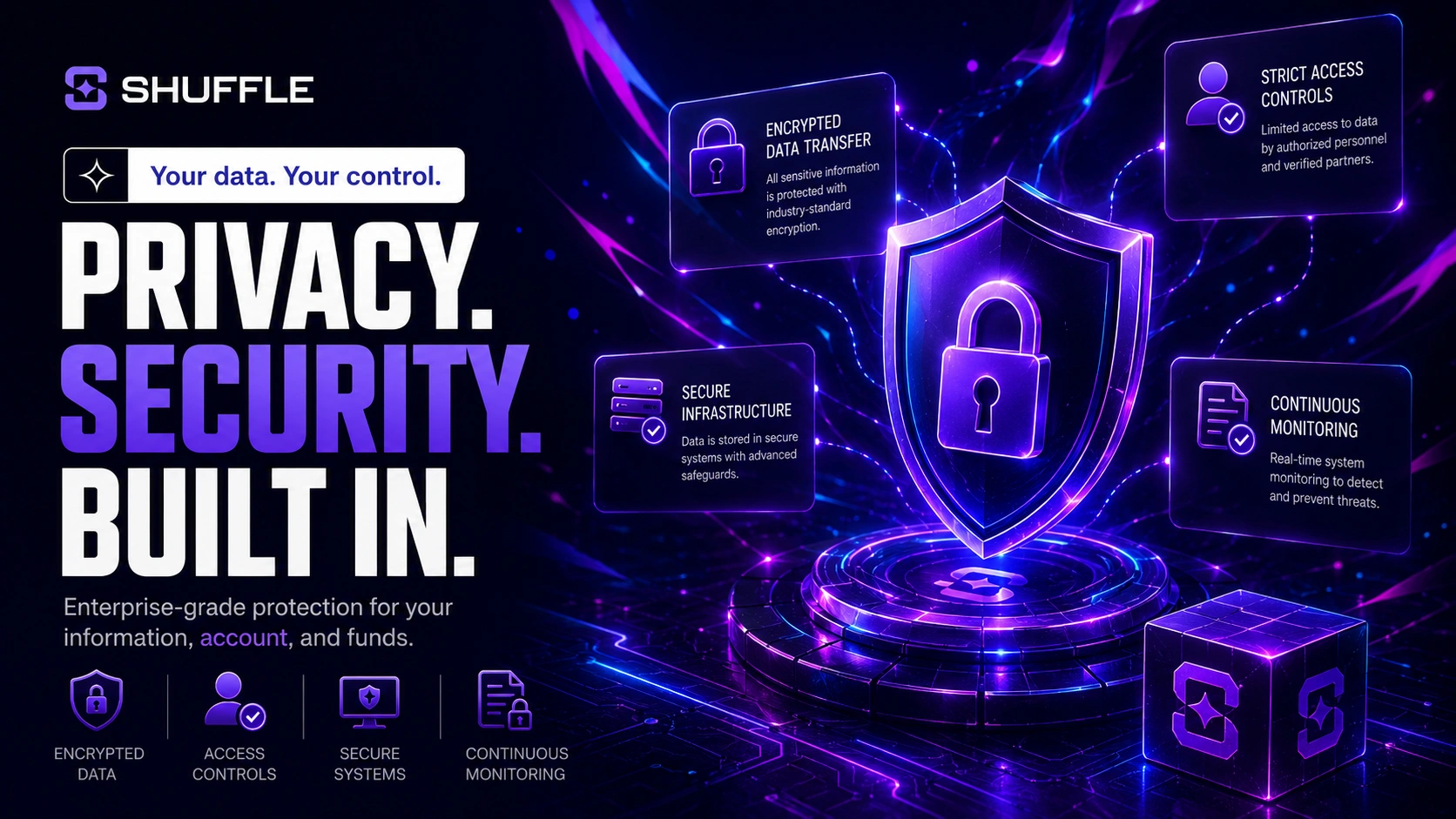
Protection measures described by Shuffle may include:
- Encryption during information transfer;
- Password-protected systems and databases;
- Secure digital storage environments;
- Restricted employee and partner access;
- Internal security monitoring and access controls.
The platform also explains that internet-based communication can never be guaranteed as completely secure. While Shuffle takes reasonable steps to protect information against misuse, loss, unauthorised access, modification, or disclosure, absolute security of transmitted information cannot be fully guaranteed.
This approach reflects standard privacy expectations for online gaming and payment environments where sensitive financial and account information may regularly move through digital systems.
How Shuffle handles data correction, retention, deletion and cookies
Users may have access to several privacy-related rights regarding their personal information. If account details become inaccurate or outdated, players can generally request corrections to improve account accuracy.
Shuffle also explains that users may request:
- Correction of incorrect personal information;
- Access to a copy of the personal information held by Shuffle;
- Deletion of certain personal data where applicable;
- Additional information regarding stored account records.
Personal information may remain stored while a user continues to be a customer of the platform. After account closure, information may still be retained for the minimum period necessary to satisfy policy requirements, legal responsibilities, or regulatory obligations.
Cookie handling forms another part of the privacy structure. Essential Cookies remain active because they support website functionality, account access, and platform operation. Performance Cookies may be used for analytics, functionality, marketing, and performance improvement.
Browser settings can often be used to manage cookie preferences, although disabling some cookies may reduce functionality or affect parts of the user experience.
FAQ
Can I ask Shuffle for a copy of my personal data?
Yes. Users may request access to personal information held by Shuffle. This can help players review stored account details and understand what information is connected to their activity.
Does deleting my account remove all personal information immediately?
Not necessarily. Shuffle may retain certain records for legal, regulatory, fraud prevention, or compliance-related reasons even after account closure.
Are cookies required to use the platform?
Some cookies are required for essential website functionality. Without Essential Cookies, account login, payments, or navigation features may not work correctly.
Does Shuffle monitor account activity for security reasons?
Yes. Account activity may be reviewed to support fraud prevention, payment protection, platform integrity, and account safety measures.
Can users object to how data is processed?
In some situations, yes. If Shuffle relies on legitimate interests for processing information, users may be able to raise questions or object depending on the circumstances described in the policy.
