

Shuffle Responsible Gambling for Safer Play, Clear Limits and Better Control
How Shuffle frames gambling as planned entertainment
Shuffle Casino online explains gambling as an activity that should fit inside personal limits rather than replace financial planning or become emotionally driven behaviour. The idea behind responsible gaming is simple – players decide in advance how much money and time they feel comfortable spending before starting a session.
The platform provides responsible gaming tools, support resources, and account management options intended to reduce the risk of harmful gambling patterns and help users maintain control over casino and sportsbook activity.
Instead of relying on emotions or reacting impulsively during wins or losses, the platform encourages users to approach gambling with a clear budget and realistic expectations. A player may enjoy casino games, sportsbook activity, or short gaming sessions while still maintaining financial balance and healthy boundaries.
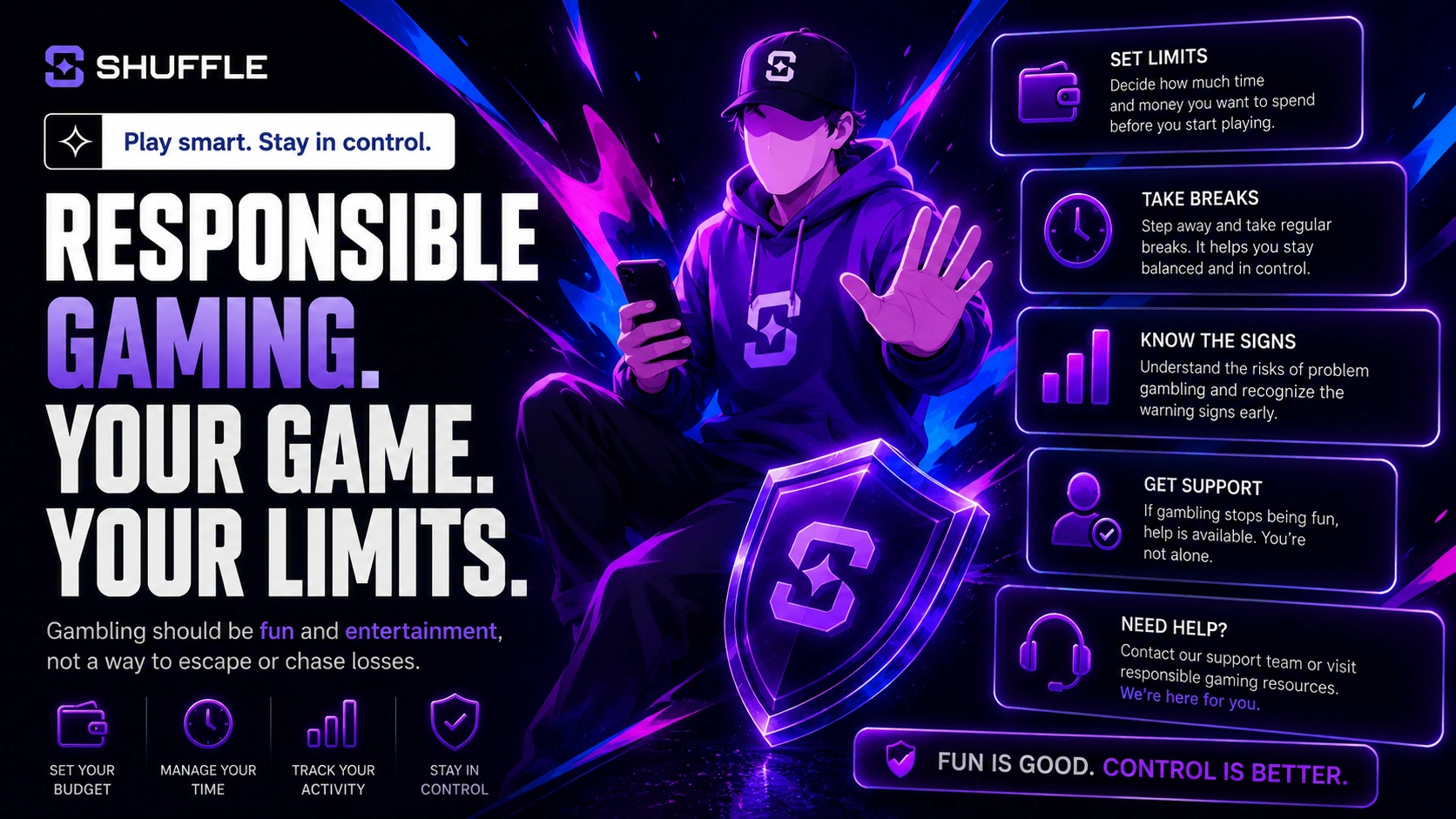
Shuffle Casino provides processes, tools, and responsible gaming resources intended to support safer account activity and reduce the possibility of problem gambling issues. These features are designed to help users manage risk rather than wait until problems become difficult to control.
Some practical habits often associated with better control include:
- Setting a fixed entertainment budget before starting;
- Deciding in advance how much time to spend gambling;
- Avoiding gambling during stress, frustration, or emotional pressure;
- Taking breaks rather than increasing stakes impulsively;
- Viewing wins and losses as part of entertainment instead of financial strategy.
This approach keeps gambling structured and helps players avoid situations where short-term decisions begin affecting long-term financial or emotional wellbeing.
Which warning signs Shuffle asks players to notice
Shuffle encourages players to recognise changes in behaviour that may suggest gambling is becoming difficult to manage. Risk does not always appear suddenly. In many situations, small behavioural shifts gradually become patterns that are harder to stop.
One of the most common signals may involve spending more time or money than originally planned. A user who repeatedly extends sessions, exceeds personal limits, or feels uncomfortable stopping may already be moving beyond entertainment-focused gambling.
Other warning signs may include:
- Trying to recover previous losses through additional betting;
- Hiding gambling activity or financial spending from others;
- Borrowing money to continue playing;
- Ignoring work, studies, or family responsibilities;
- Feeling anxious, guilty, frustrated, or emotionally dependent on gambling activity.
Sometimes risky gambling behaviour can also become linked with emotional stress, irritability, sleep disruption, or increased alcohol use during betting sessions. While a single sign may not always indicate a serious issue, several warning signs appearing together may be a strong signal to pause and reassess gambling habits.
Shuffle presents these indicators as practical awareness tools rather than judgments, helping players identify behavioural changes early.
How Shuffle self-exclusion works for casino and sports
Self-exclusion is available for users who feel their gambling activity may be becoming difficult to manage. Instead of simply limiting deposits or wagers, self-exclusion creates a stronger barrier by restricting access to selected parts of the account.
Shuffle allows users to activate self-exclusion for several different periods:
| Self-Exclusion Option | Available Duration |
|---|---|
| Short pause | 1 day |
| Temporary restriction | 1 week |
| Extended break | 1 month |
| Long-term restriction | 6 months |
| Permanent block | Permanent |
Self-exclusion can apply to:
- Casino only;
- Sports only;
- Casino and Sports combined.
When only one section is blocked, players may still log into the account but cannot place wagers inside the restricted category. For example, a sportsbook restriction still allows casino access if casino activity remains enabled.
However, when both Casino and Sports are selected together, account access becomes unavailable during the exclusion period. This flexibility allows users to tailor restrictions depending on personal concerns rather than applying one universal account block.
How Shuffle sets wager limits, loss limits and cooldown rules
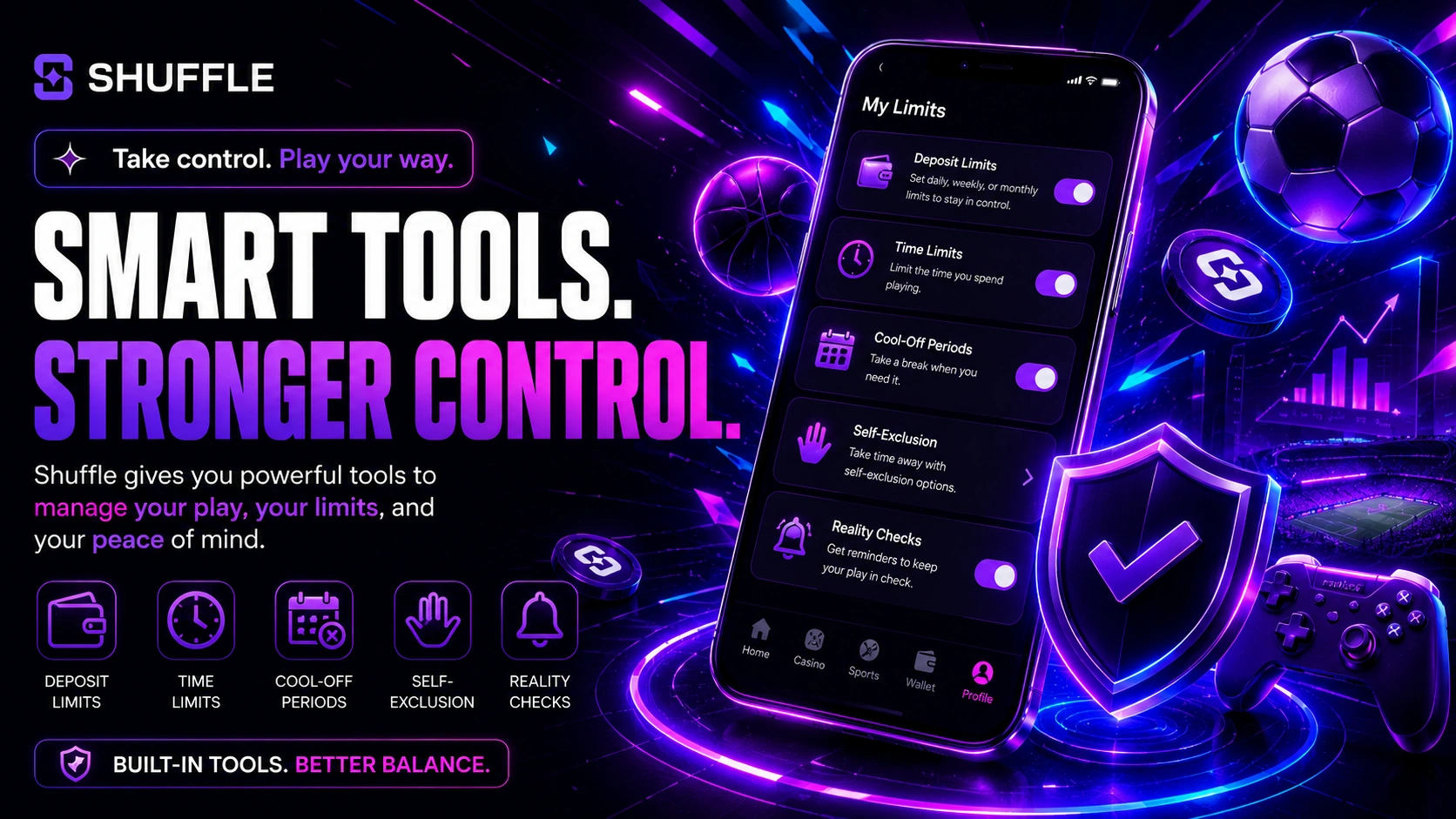
Shuffle provides several account controls designed to help users manage gambling activity before it becomes difficult to control. These tools work automatically once activated and can help reduce impulsive behaviour.
Users may set:
- Wager limits based on betting activity;
- Loss limits linked to net gambling losses;
- Daily, weekly, or monthly control periods;
- Temporary restrictions after reaching account limits.
If a wager or loss threshold is reached, additional betting activity becomes restricted until the selected time period expires.
Loss limits are calculated using net losses, meaning bonuses or profits may be considered when determining how much has been lost overall. This creates a more balanced system than simply measuring deposits alone.
Self-exclusion and limit settings can be managed through the Shuffle Wise dashboard. After submitting a self-exclusion request, a 24-hour cooldown period applies before activation is completed. During this period, users may still want to stop gambling activity independently and avoid placing additional wagers.
Customer Support remains available for users who need help understanding responsible gaming settings, restrictions, or account tools.
FAQ
Can responsible gaming limits be changed later?
Yes, depending on the type of restriction selected. Some limits may be adjusted, while stronger controls such as self-exclusion often follow stricter account protection rules.
Does self-exclusion delete account funds?
No. Responsible gambling restrictions are designed to limit access to betting activity, not automatically remove account balances. Withdrawal procedures may still apply depending on verification status.
Can users apply responsible gaming tools without closing the account?
Yes. Wager limits, loss limits, and cooldown periods are intended for players who want more control without fully restricting account access.
What happens if a user reaches a loss limit?
Once the selected threshold is reached, gambling activity becomes restricted until the chosen daily, weekly, or monthly period finishes. This helps prevent additional unplanned spending.
Is customer support available for responsible gambling questions?
Yes. Shuffle Customer Support can help explain responsible gaming tools, account restrictions, self-exclusion settings, and safer gambling options.
